Insect Font: A Cute Quirky Display Typeface for Small Business
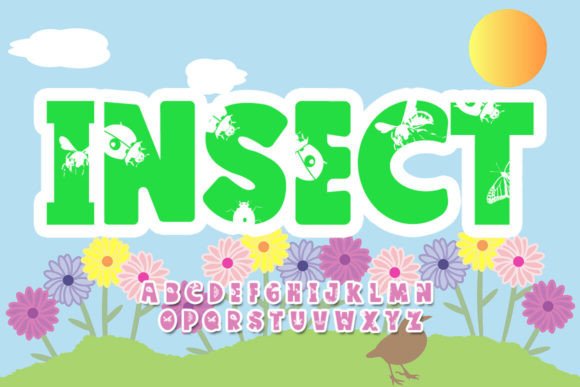
When you run a small business, every design choice you make says something about your brand. From your logo to your product labels to your social media posts, the fonts you choose play a huge role in how customers perceive your professionalism and trustworthiness. Insect is a cute and quirky display font that brings a joyful touch to any creative project. Whether you are designing packaging, building a website, or creating marketing materials, this display typeface can help your business stand out while maintaining a consistent and recognizable brand identity. Small business owners often struggle with looking polished without losing personality, and Insect offers a way to achieve both.
How Insect Brings a Joyful, Quirky Tone to Small Business Branding
Insect is a display font that immediately communicates warmth, playfulness, and approachability. For small business owners, choosing a font with personality is one of the quickest ways to make your brand feel more human and memorable. Unlike a neutral sans serif that blends into the background, Insect adds character to every headline, logo, and accent piece you create. When you use Insect consistently across your business cards, thank-you cards, website headers, and product packaging, your brand starts to feel cohesive and intentional. Customers begin to recognize your style, which builds trust over time. The quirky shapes and cute letterforms of this display font make it especially well suited for creative fields like handmade goods, children's products, bakeries, gift shops, and beauty brands. If your business targets customers who appreciate originality and a bit of fun, Insect can help you communicate that personality without saying a word. A consistent brand identity built around a distinctive display typeface signals that you care about the details, which is exactly the kind of impression that turns first-time buyers into repeat customers.
Insect for Product Labels, Packaging, and Handmade Goods
Product packaging is often the first physical interaction a customer has with your brand. Whether you sell candles, soaps, baked goods, or boutique clothing, the typography on your labels and packaging directly affects how your products are perceived. Insect works beautifully as a headline or accent font on product labels. Its cute and quirky appearance adds a handcrafted, artisanal feel that many small businesses strive for. Imagine a small batch honey jar with a simple label using Insect for the brand name, paired with a clean sans serif for the ingredients and weight. That combination feels both professional and charming. For a handmade candle brand, using Insect on the label can convey warmth and personality, making the product feel more special and personal. On packaging, Insect can be used for product names, taglines, or decorative elements. Because it is a display font, it is best used sparingly as the hero element on a label or package rather than for long blocks of text. This approach keeps your packaging looking clean and readable while still adding that joyful, quirky touch that helps your products stand out on a crowded shelf. For small businesses selling through farmers markets, Etsy, or local boutiques, distinctive packaging can be the difference between a customer walking past or stopping to pick up your product.
Using Insect in Social Media Graphics and Digital Marketing
Social media is where most small businesses connect with their audience today. From Instagram posts to Pinterest pins to Facebook ads, your typography needs to be legible at small sizes and on mobile screens. Insect works well as a display font for short headlines, quotes, and call-to-action text in your social media graphics. Because of its playful personality, it is great for announcement posts, product launches, seasonal promotions, and behind-the-scenes content. When using Insect digitally, keep the text size large enough to remain readable on a phone screen. It is not a font meant for long paragraphs, but for short, punchy messages that grab attention. Pairing Insect with a simple sans serif font for supporting text helps maintain readability while keeping your brand look cohesive. For Pinterest graphics, Insect can be used for titles and overlays, helping your pins stand out in a crowded feed. For website banners and email headers, Insect adds a friendly, approachable feel that invites customers to learn more about your products or services. Consistent use of the same display font across all your digital touchpoints reinforces your brand identity and makes your business appear more established and professional. Small business owners who maintain this kind of visual consistency often see stronger engagement and higher recognition from their audience.
Pairing Insect with a Sans Serif or Serif Font for Professional Consistency
No single font can do everything well. Even the most versatile display fonts work best when paired with a clean, readable companion typeface. Insect, as a quirky display font, pairs beautifully with a simple sans serif font or a neutral serif font. The contrast between the playful headline and the clean body text creates visual interest while keeping your materials easy to read. For a bakery brand, you might use Insect for the logo and product names, and pair it with a light sans serif for menu descriptions and ingredient lists. For a coaching business, Insect could be used for workshop titles and social media quotes, while a readable serif handles longer content on your website or handouts. When pairing fonts, try to choose a sans serif or serif that complements the mood of Insect without competing with it. A simple geometric sans serif or a classic serif with light contrast works well. The goal is balance: let Insect be the star of your headlines, logos, and accent text, while your companion font handles the heavy lifting of readability for body copy, instructions, and legal text. This kind of thoughtful font pairing signals to customers that you pay attention to detail, which builds trust and professionalism. For small business owners, investing time in selecting complementary typefaces is a practical way to elevate your brand without hiring a designer.
Testing Insect Across Business Touchpoints Before You Commit
Before you settle on any font for your brand, it is wise to test it across the materials you actually use. Print a sample label, create a mockup of your website header, and design a social media post with Insect to see how it performs in real-world conditions. Because Insect is a display font with distinctive letterforms, you want to make sure it remains legible at the sizes you need. On small product labels or business cards, test whether the font stays clear when printed at a small scale. On digital screens, check how it looks on mobile devices versus desktop monitors. Testing helps you avoid surprises and ensures your brand looks consistent and professional across every touchpoint. If you find that Insect works perfectly for your headlines but feels too heavy or too playful for certain applications, you can always reserve it for specific use cases like logos, product names, or accent text, while using a simpler font for everything else. The key is to maintain consistency: once you decide where and how to use Insect, stick with that approach across all your customer-facing materials. Consistency is what makes a brand feel trustworthy and recognizable. Small business owners who take the time to test their typography choices before launching a new product line or website refresh often save themselves from costly redesigns down the road.
Insect Font Licensing for Commercial Products and Client Work
Before you use Insect in your business materials, take a moment to review the commercial font licensing. Many premium font designers offer different licensing tiers depending on how you plan to use the typeface. If you are using Insect for your own business on product labels, packaging, website graphics, social media content, and marketing materials, you will likely need a standard commercial license. If you plan to sell products that feature the font, such as printed merchandise, templates, or digital downloads, you may need an extended license. If you are a designer creating logos or branding materials for clients, check whether your license covers client work. Understanding font licensing protects you from legal issues and ensures you are using Insect correctly for your business model. Always read the licensing terms carefully before purchasing or downloading any display font for commercial use. A small investment in the right license gives you peace of mind and allows you to use Insect confidently across all your brand materials. For small business owners and entrepreneurs, this step is just as important as choosing the right color palette or logo, because proper licensing keeps your business compliant and protects your creative work.